Steal Cake — A Scene Built From One Frame
Six stages, one take, one stolen cake. The trick is that you supply the first frame as an image, so the model never has to invent it.
Have it running in three steps
- 1Copy the prompt
- 2Open ImagineArt
- 3Paste it and generate
What you'll need
30 min- ImagineArt
- Claude


A cake sits on a car seat. A woman walks past, stops, comes back, breaks the window with a rock, takes it, and runs off eating it. Fifteen seconds, six stages, one prompt.
It’s a trend format, which is the useful part — the structure works for any product you can put on that seat.
The whole process
- Go to ImagineArt and open the Image section.
- Generate the first frame: your product sitting somewhere it shouldn't be.
- Have a clear reference of the person — your avatar, or a photo of yourself.
- Switch to Video, pick Seedance 2.5, open the Reference tab.
- Upload the person as @Image1 and the first frame as @Image2.
- Paste the six-stage prompt and generate.
The six stages
Each one has a stated end state, and the next stage begins from it. That’s what keeps a fifteen-second sequence from turning into six unrelated clips.
| Stage | Time | What happens |
|---|---|---|
| 1 | 0–3s | She walks past the window. Cake untouched. |
| 2 | 3–6s | She walks back in reverse, spots it, leans in. |
| 3 | 6–8s | She drops out of frame, rises with a rock in hand. |
| 4 | 8–11s | One strike. Glass collapses. She lifts the cake out. |
| 5 | 11–13s | Hard cut outside. She runs at camera, eating. |
| 6 | 13–15s | She passes the lens, glances back, gone. |
The beat that makes it work is stage 3. She disappears below the frame and comes back armed — and you never see her pick anything up. Leaving that out is a deliberate choice, and it’s more effective than showing it.
Build the first frame
This is the whole foundation. Generate a still of your product sitting somewhere slightly wrong — a car seat, a shop window, a locked display case. The composition of this image is the opening composition of the video.
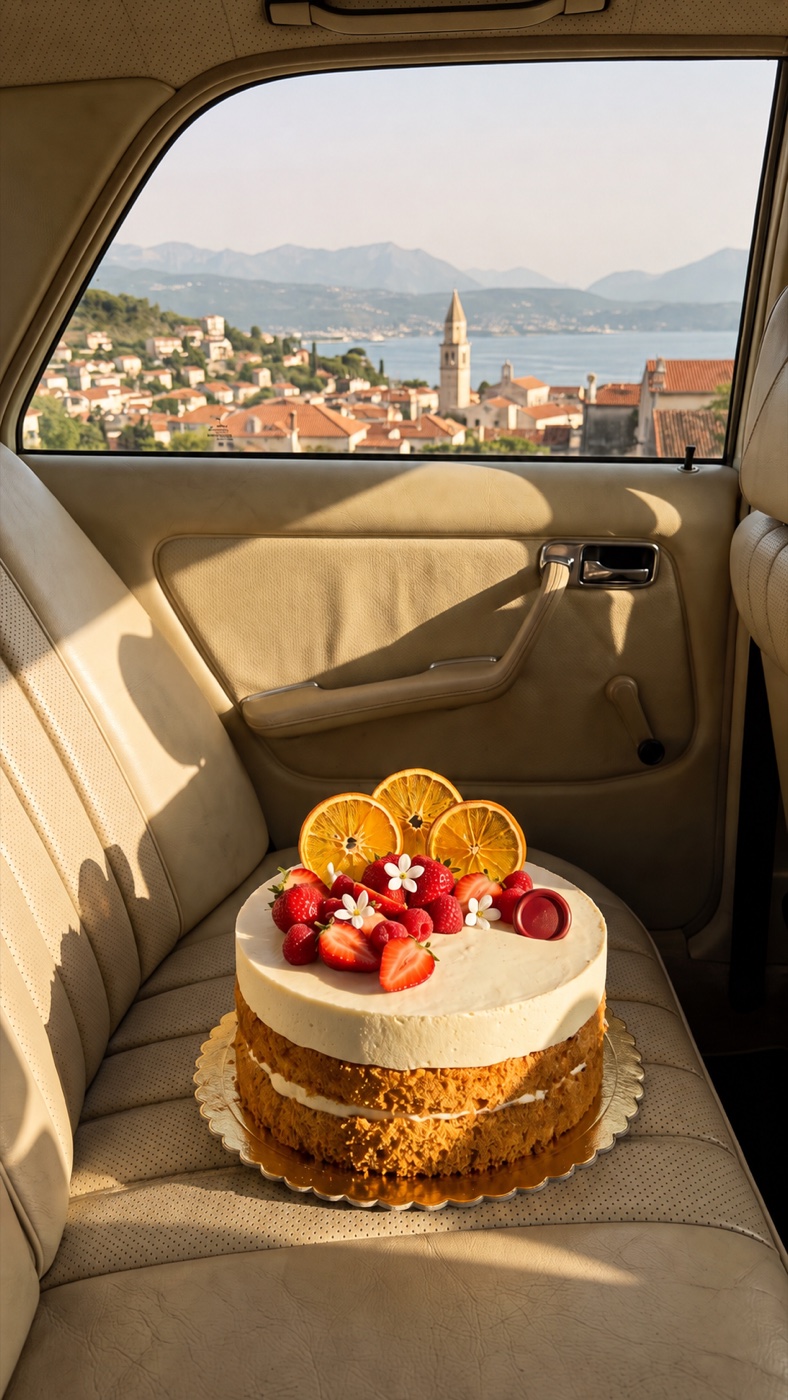
A layered cream cake on a gold board, standing on the cream leather back seat
of a parked vintage car. Warm late-afternoon sun through a closed side window;
a coastal town and sea visible beyond the glass. Camera inside the car at seat
height, looking toward the window past the cake. The cake is sharp in the
foreground, the view through the glass slightly soft.
No people in frame, glass intact, no text or logos.
Two things matter more than they look:
No people in it. The person arrives in stage 1. If someone is already in the frame, the model has to reconcile two versions of them and the opening beat falls apart.
Glass intact. The whole scene turns on the window breaking exactly once, at stage 4. Starting from unbroken glass gives the model a clean before and after.
Reference the person
You need one clear image of whoever is doing the stealing — your avatar, or a photo of yourself. A plain standing shot in the clothes they’ll wear is enough; it doesn’t need to be a full character sheet.
Upload it as @Image1. The prompt uses it for appearance and clothing only,
and explicitly rejects its background, lighting and pose — otherwise the model
tries to bring the studio into the car park.
Paste the prompt
@Image2 is the first frame. It defines the opening composition, the camera position inside the car, the seat, the closed window, the light, and the exact position of <Cake> standing on its gold board on the seat. <Cake> — shape, layers, decoration and board the same as in the reference image. The video begins on this frame — no separate establishing shot.
@Image1 defines <Woman> — appearance, hair and clothing the same as in the reference image. Do not use its studio background, its lighting or its standing pose. Do not reproduce any of its text or framing. Only one <Woman> exists in the whole video. Do not change the first-frame composition defined by @Image2. <Cake> stays on the car seat until Stage 4, then belongs only to <Woman>. Only one <Woman>, one <Cake> and one <Stone> exist in the whole video.
[Generation Goal] A 15-second theft scene. The central subject is <Woman>. The primary event: she spots <Cake> through the window of a parked car, breaks the glass with <Stone>, takes <Cake> and runs away eating it.
[Stage 1 | 0-3s] Initial state: the interior exactly as @Image2, no people, glass intact, camera locked. Primary event: <Woman> walks past outside the window from left to right, seen through the glass, slightly out of focus, and leaves the frame. <Cake> stays sharp in the foreground. End state: <Cake> untouched on the seat, glass intact, no people in frame.
[Stage 2 | 3-6s] Continue from the previous stage: same camera position, same interior, <Cake> unmoved. Primary event: <Woman> returns into frame walking backwards — she moves right to left in reverse, her body still facing right, her head turned over her shoulder toward the window, her eyes on <Cake>. She stops level with the glass and leans slightly closer. Rack focus: shift focus smoothly from <Cake> in the foreground to her face behind the glass — <Cake> softens, her face changes from soft to sharp. End state: <Woman> stands outside the closed window, gaze fixed on <Cake>, glass intact.
[Stage 3 | 6-8s] Continue from the previous stage: same interior, glass intact, <Cake> unmoved. Primary event: <Woman> lowers straight down and out of the bottom edge of the frame. The frame holds on the empty window and <Cake> alone, with nothing moving in shot. Then she rises back up into frame in the same spot, shoulders raised, jaw set, <Stone> — a fist-sized grey rock — now held in her right hand and clearly visible against the glass. What she does below the frame is never shown. End state: <Woman> back at the window in the same position, <Stone> visible in her hand, glass still intact.
[Stage 4 | 8-11s] Continue from the previous stage: same interior, same light, camera now static. Primary event: <Woman> swings <Stone> into the window — <Stone> stays visible in frame through the swing and at the point of contact. The tempered glass gives way in a single decisive strike and collapses inward into small blunt granules that scatter across the seat. She drops <Stone> out of frame, reaches both hands through the opening, slides her fingers under the gold board and lifts <Cake> out of the car level and upright, the decoration undisturbed. End state: the seat is empty except for scattered glass granules, the window is an open hole, <Cake> is in <Woman>‘s two hands outside the car, still intact.
[Stage 5 | 11-13s] Hard cut at 11 seconds to the exterior — a coastal road in the same warm afternoon light seen through the window in @Image2. Primary event: the camera is in front of <Woman> at chest height, moving backwards as she runs toward it at a steady, controlled sprint. She holds <Cake> in her left hand at chest height, the gold board level. With her right hand she scoops a piece off the top of <Cake> and eats it while running. A few crumbs and one berry fall away and are gone. End state: <Woman> running toward camera, <Cake> in her left hand with a scooped hollow in its top, her right hand and mouth smeared with cream.
[Stage 6 | 13-15s] Continue from the previous stage: same road, same light, <Cake> still in her left hand with the same hollow in its top. Primary event: the camera decelerates and stops. <Woman> runs past the lens and out of the frame, throwing one glance back over her shoulder with a brief closed-mouth grin as she passes, still chewing. End state: the empty coastal road in the same light, no people in frame, the siren still audible.
[Camera] Stages 1-4 are one continuous interior shot from the position of @Image2: the camera is locked through Stage 1, then pushes in slowly toward the window across Stages 2 and 3, and holds static from the start of Stage 4 onward. One hard cut at 11 seconds. Stages 5 and 6 are a single reverse tracking shot that decelerates to a stop.
[Audio] Muffled outdoor ambience and sea wind through the closed glass, <soft footsteps on asphalt>, <scuffed reverse steps>. The ambience drops to near-silent room tone for the two seconds before the strike. Then <one hard stone-on-glass burst followed by granules raining onto leather>, <a sharp exhale>, <quick running footsteps on asphalt>, <a soft muffled chew>, (a low tense pulse under the second half). A distant two-tone police siren begins on the same frame as the glass burst, already clearly audible at that instant rather than fading in, and rises steadily until the end. No dialogue, no voiceover.
[Maintain Consistency] One woman, one cake, one stone, no other people and no other vehicles in any stage. Keep her appearance and clothing from @Image1 unchanged in every stage, including after the glass breaks and while she eats. Keep the car interior, window position and camera axis from @Image2 through Stages 1-4. <Cake> keeps the shape, layers, decoration and gold board from @Image2 unchanged through Stage 4. She takes <Cake> with two hands in Stage 4 and carries it in her left hand alone from Stage 5 to the last frame, her right hand free. From the scoop in Stage 5 onward the hollow in its top and the missing berries persist to the last frame and never restore. Her direction of travel is left to right in Stage 1 and right to left in Stage 2 — do not flip these. The glass breaks only once and stays broken. Natural daylight photography, no color shift between stages. No on-screen text, no subtitles.
What's actually doing the work
Strip away the scene and four techniques transfer to anything you make.
Angle brackets as a cast list. <Woman>, <Cake>, <Stone> are declared
once and then referred to by name. It reads like a script rather than prose,
and the model stops inventing a second cake in stage 4.
An end state on every stage. Each block finishes by describing exactly what the frame contains when it’s over, and the next block opens from it. This is the single highest-value habit in multi-stage prompting.
Damage that persists. The hollow scooped out of the cake has to survive to the last frame. Models love to quietly restore things between shots, and saying never restore is what stops it.
Audio on the same frame as the action. The siren “begins on the same frame as the glass burst, already clearly audible rather than fading in.” Without that timing instruction, sound design drifts off the cut.
Adapting it to your product
The cake is interchangeable. Anything that reads as desirable and slightly out of reach works — a bag on a seat, a bottle in a locked case, a pair of trainers behind glass.
What you’d change:
- The first frame — your product, somewhere it shouldn’t be
- The obstacle — glass is easy because breaking it is one clean action
- The payoff in stage 5 — with a cake she eats it. With a bag she wears it, with trainers she puts them on mid-run. The payoff has to be something physically doable while moving.
What you’d keep: the six-stage shape, the end states, the single hard cut at eleven seconds, and the rule that only one of each object exists.
Where it goes wrong
| What you got | The fix |
|---|---|
| A second cake appears after the break | Restate “only one <Cake> exists in the whole video” |
| The glass re-forms in a later stage | Add “the glass breaks only once and stays broken” |
| She changes clothes mid-scene | Her appearance comes from @Image1 — say “unchanged in every stage” |
| The opening shot isn’t your frame | Your uploads are swapped — first frame must be @Image2 |
| The scooped hollow disappears | “Persist to the last frame and never restore” |
Why this workflow runs here
Images and video in one place
Free to start
Minutes, not days
Make yours in the next 30 min
You have the whole prompt and every setting. The only thing left is an account, and that takes a minute.
- Free to start
- Prompts ready to paste
- Upgrade only if you want more
Referral link — if you subscribe I earn a commission, at no extra cost to you. More on that.
Related prompts
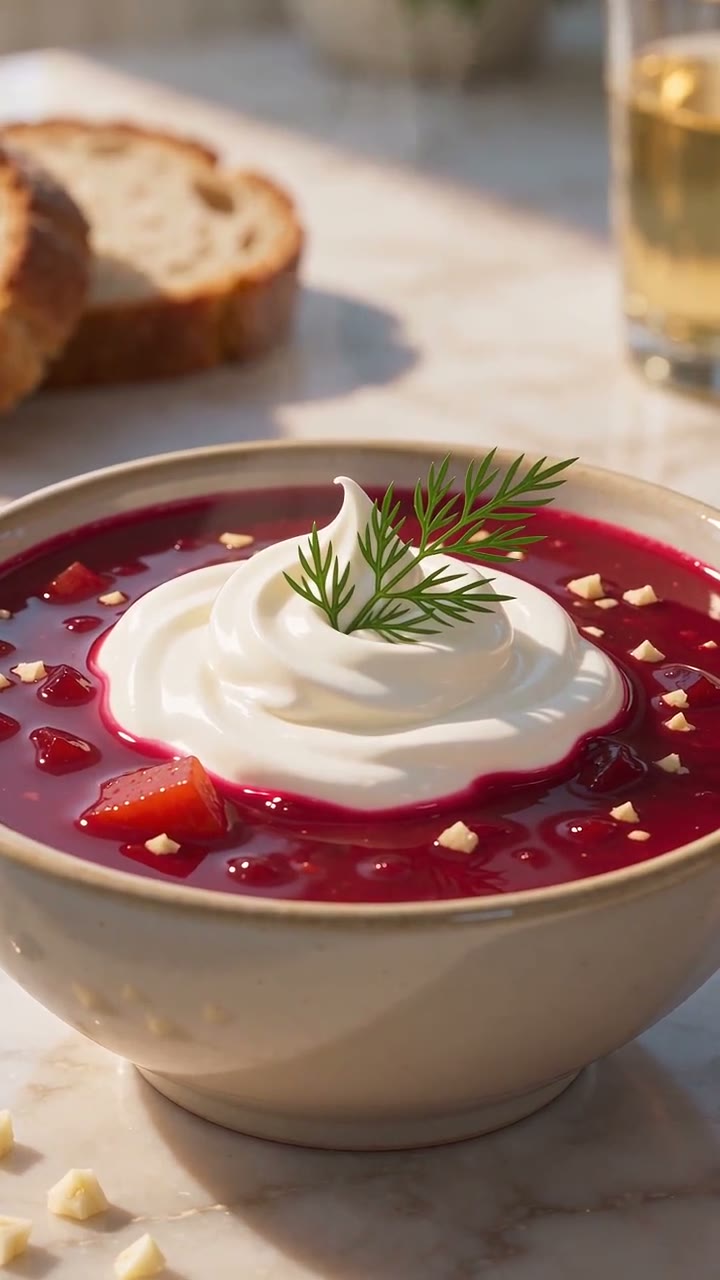 Cinematic Free
 Anime Borscht — The Whole Recipe in One 25-Second Video
One prompt cooks Ukrainian red borscht from raw meat to a served bowl, in glossy anime style. Six stages, hands and food only, vertical for Reels.
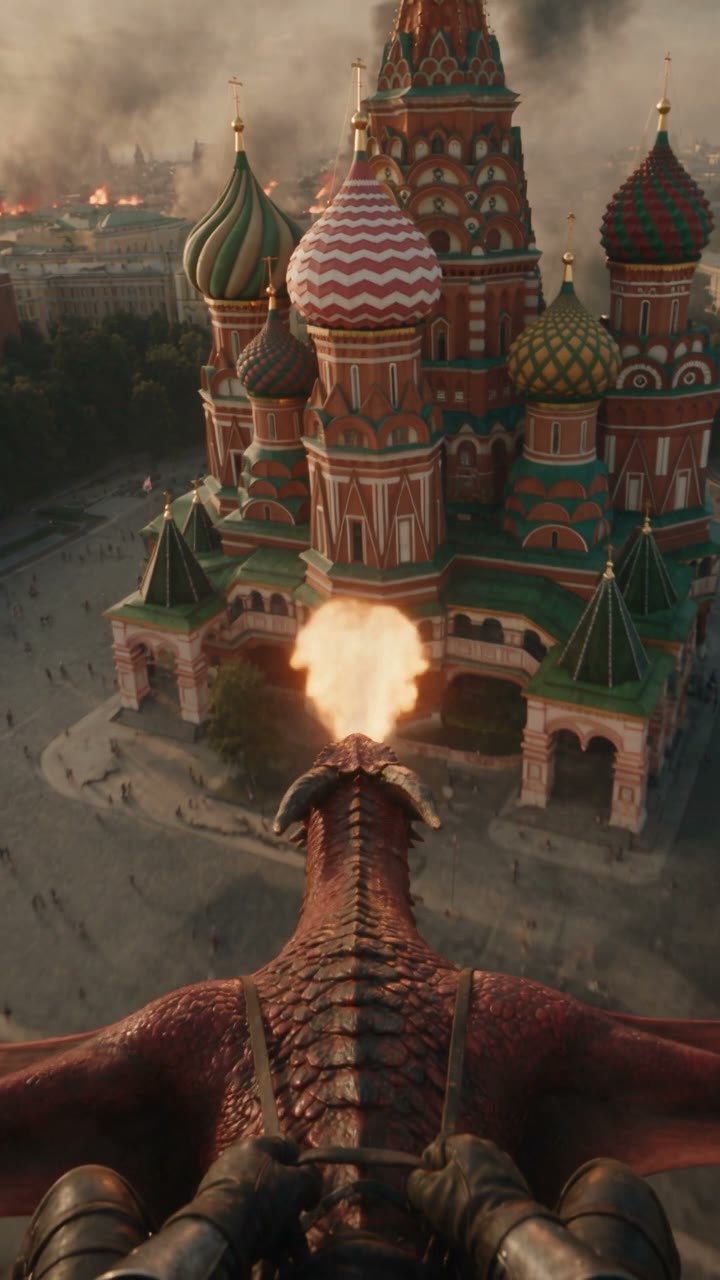 Cinematic Free
 Dragon Flight — Thirty Seconds From the Saddle, No Cuts
A first-person dragon flight that never cuts once. The work isn't in the video prompt — it's in the still you hand it, and in the rules that stop the model from inventing a second dragon.
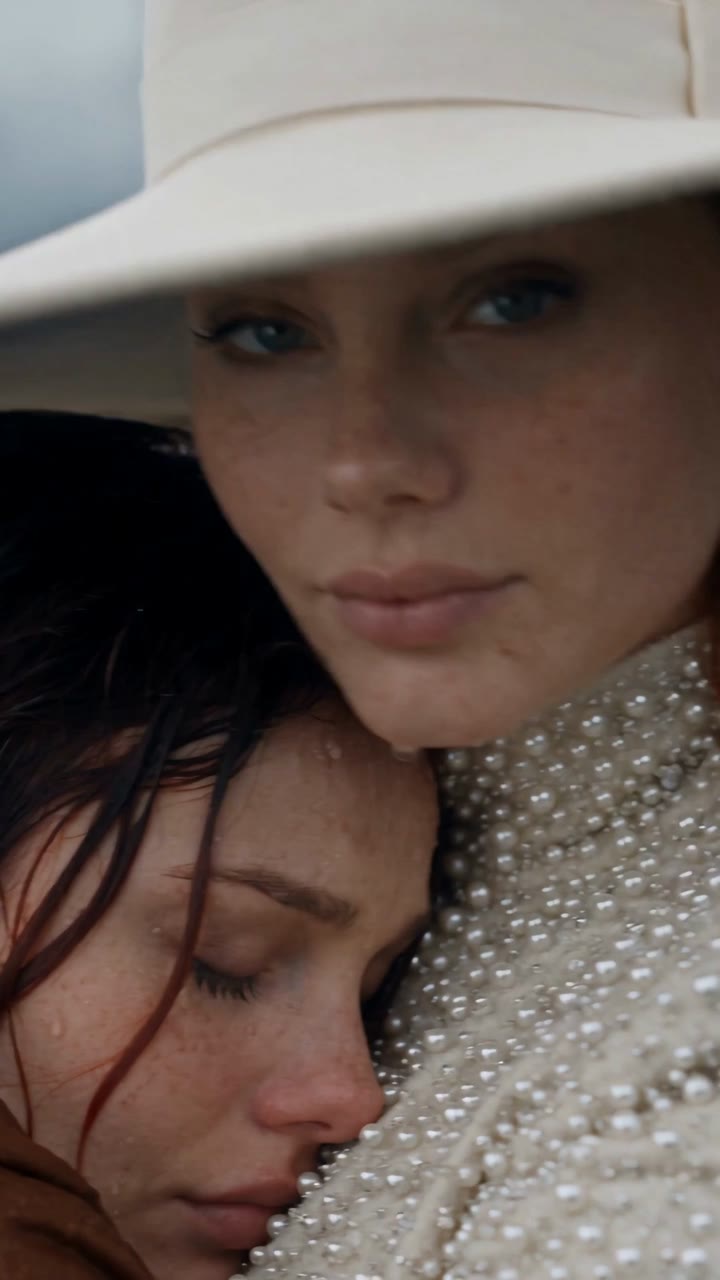 Cinematic Free
 You Save Yourself — A 15-Second Cinematic Reel
Two versions of the same woman on a storm-lashed sea arch, and the one that made it reaches down. Nine shots, three reference images, one prompt.